
A Starter Guide to Assessing Your Aging Wood Floor
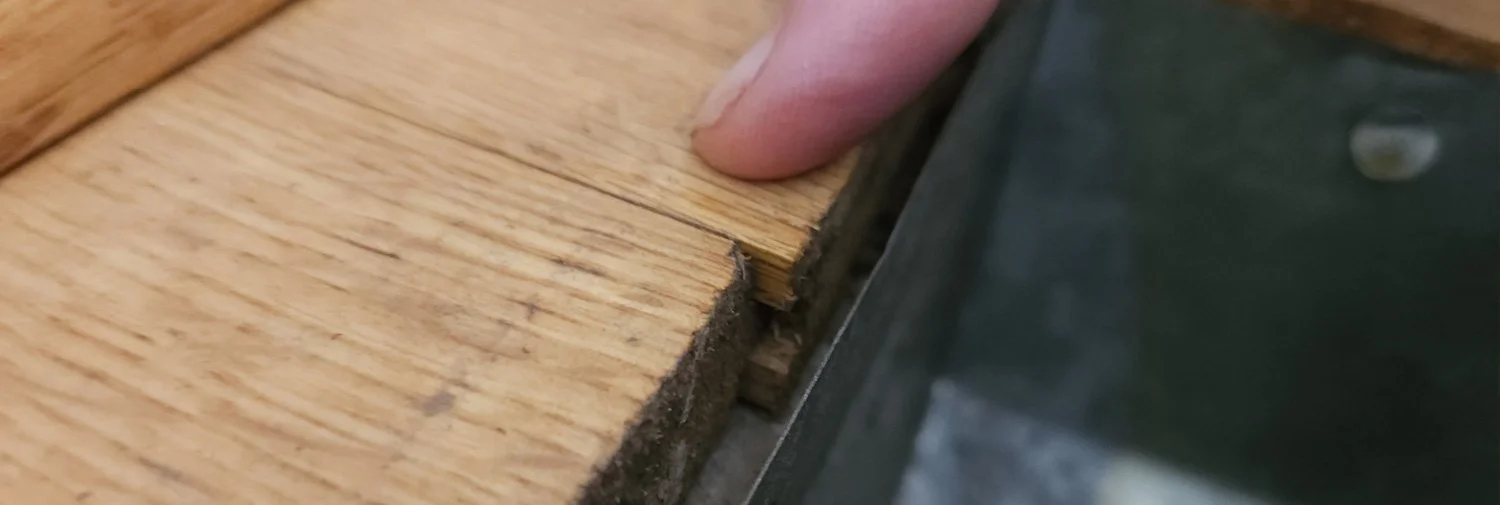
A homeowner examines a 100-year-old Eastern Oak floor.
Have you ever looked at your beloved old wood floor and wondered it could be refinished, or wondered if the time has come for it be replaced? This guide for homeowners is designed to help shed some light on four key things to look for to assess how much life is left in your floor.
The Anatomy of a Solid Wood Floor Plank
Let’s start by taking a look at a cross section of a floor board you would typically find in a historic home.

The Wear Layer
The top of the plank floor consist of what is called the wear layer, which is often about 4mm thick when it is first installed. This layer can be sanded and refinished periodically over the years. Once this crucial layer is gone, it is time to refinish your floor.
Tounge and Groove
Below the wear layer is what is referred to as the tongue and groove. Older floors were constructed of solid wood. The tongue and groove allowed this flooring to interlock together as it was installed, while also providing a way to hide the installation nails that secured it to the sub flooring. All the wood below the top of that installation nail forms the bottom layer which was never meant to act as the surface of your floor.
How to Determine if Your Floor Needs to be Refinished or Replaced
Question 1: Can you see the nails?
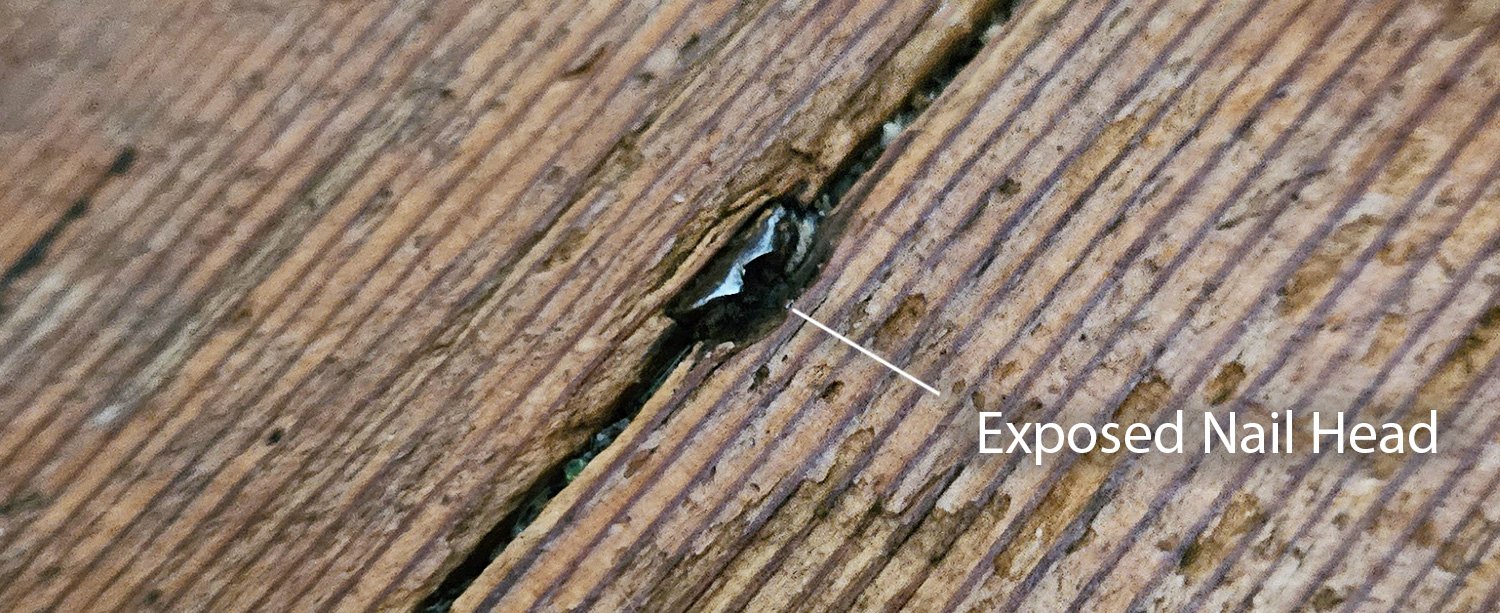
If you can already see the nail heads, your wear layer is gone and your floor is ready to be replaced.
Question 2: Is there enough wear layer left for your floor to be refinished?
This can be a bit hard to determine, but if you put on your sleuthing hat and pull up a floor vent you may be able to reveal the tongue and groove. Take a look and see how much wear layer is left above the tongue and measure it.
Depending on the condition of your floor and how much wear layer is left, you may or may not have enough surface left for refinishing. A flooring refinisher/installer can help you make a final determination.
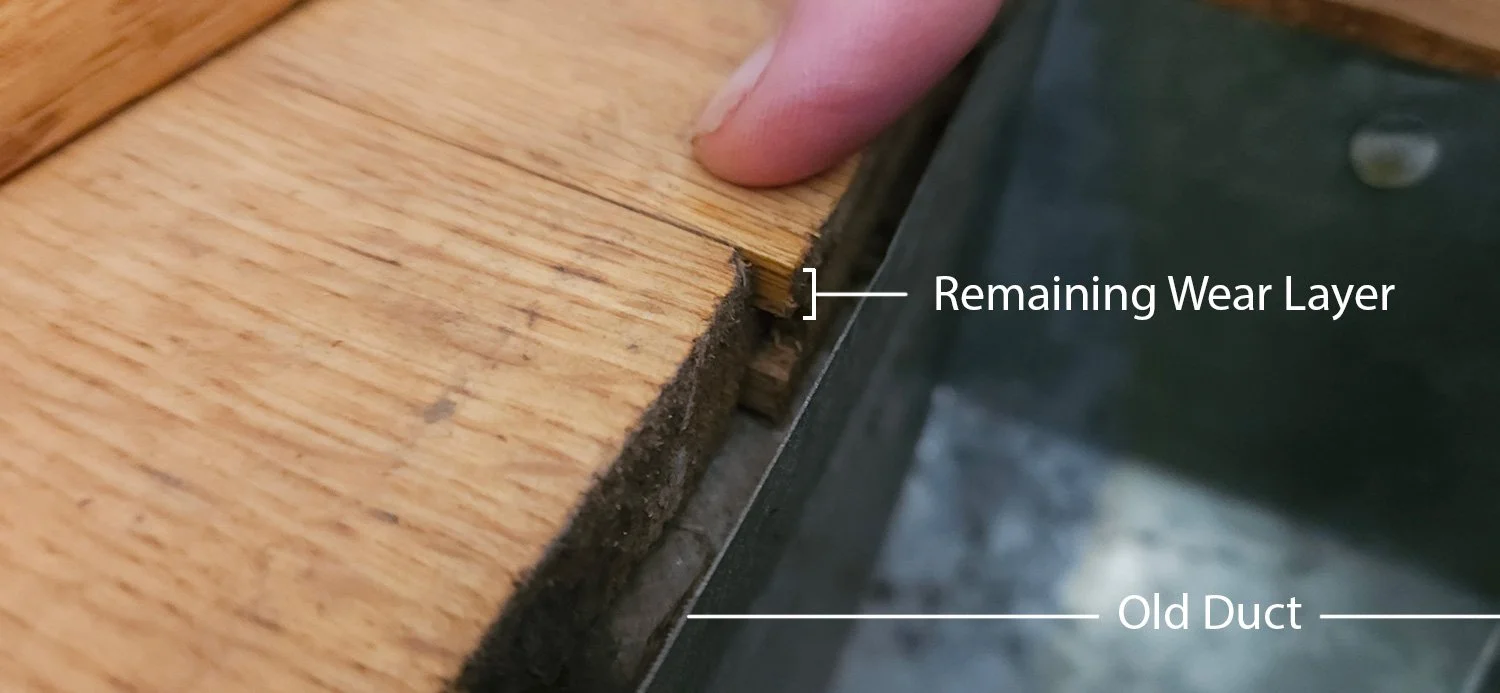
An old heat vent was temporarily removed in this 1920s home to reveal the remaining wear layer.
Question 3: What is the condition of your floor?
If the floor is in good condition you could have enough to refinish as long as there is not too much wear and damage. Some floors have had a very rough life though and it is possible that the damage exceeds the wear layer, and it is time for a new floor.
Special Note: In homes in the Pacific Northwest, Douglas-fir (a less dense wood) was often installed in bedrooms and non-public facing parts of the house. These floors can wear out faster than the public parts that were often installed with 2 ¼” Eastern White Oak.
Special Note: Oregon White Oak is actually denser than Eastern White Oak, but was not typically considered for flooring in the past because it was so dense and difficult to work with. But we love how incredibly durable this flooring is and believe it is an exceptional choice if you are looking to replace your floor.
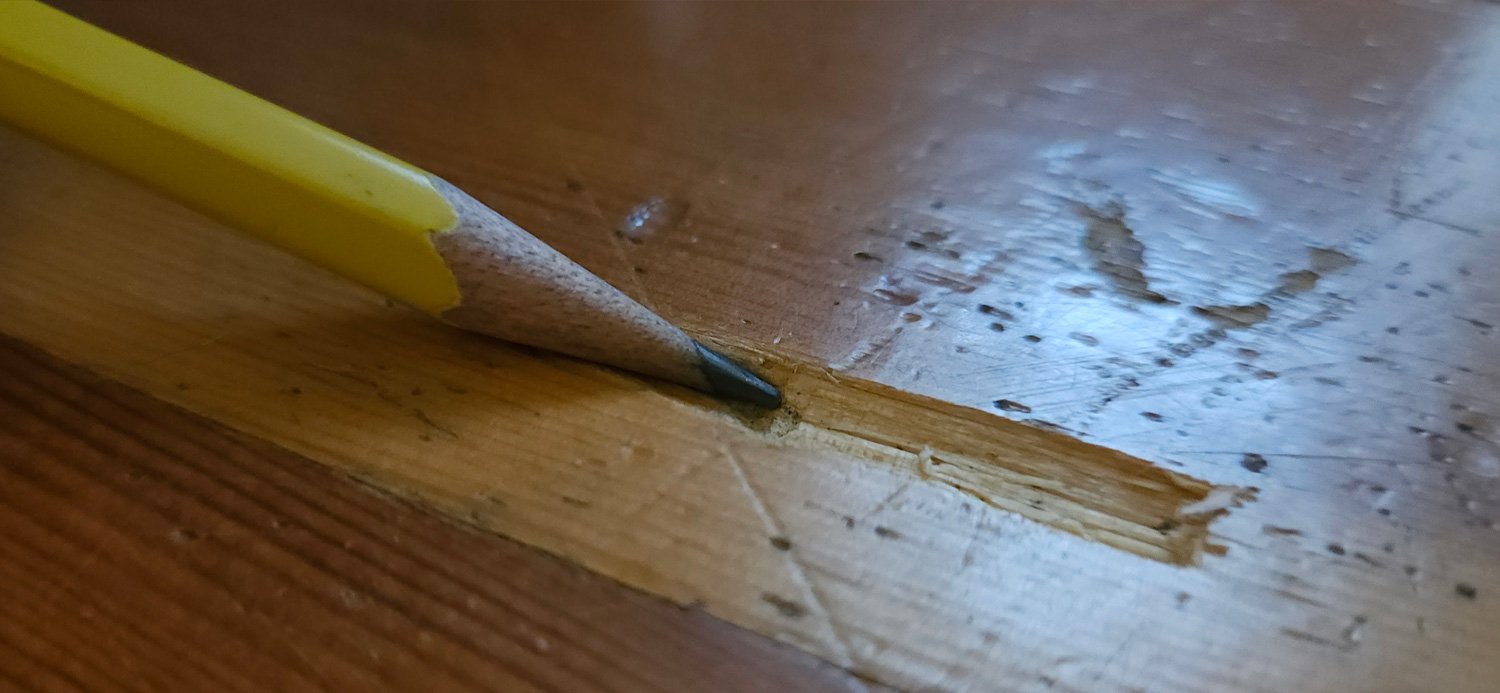
A deep gouge on a Douglas-fir floor from the 1920s.
Question 4: Are there gaps?
Are you experiencing sock-catch gaps and possibly splinters in your feet? In older homes, wood floors have been expanding and contracting as your home’s humidity decreases each winter, and increases each summer. Over time gaps can open up, especially in solid wood floors. An installer can fill those cracks when they refinish but your floor will continue to move and that filling can fail over time.
If you feel that the gaps are an aesthetic issue you may want to replace your floor.
Fun note: Zena Wide Plank uses hardwood in the top 4 mm while an engineered core is constructed from multiple layers where the grain runs in different directions. This stabilizes the expansion and contraction of the floor, preventing large gaps from developing over time.
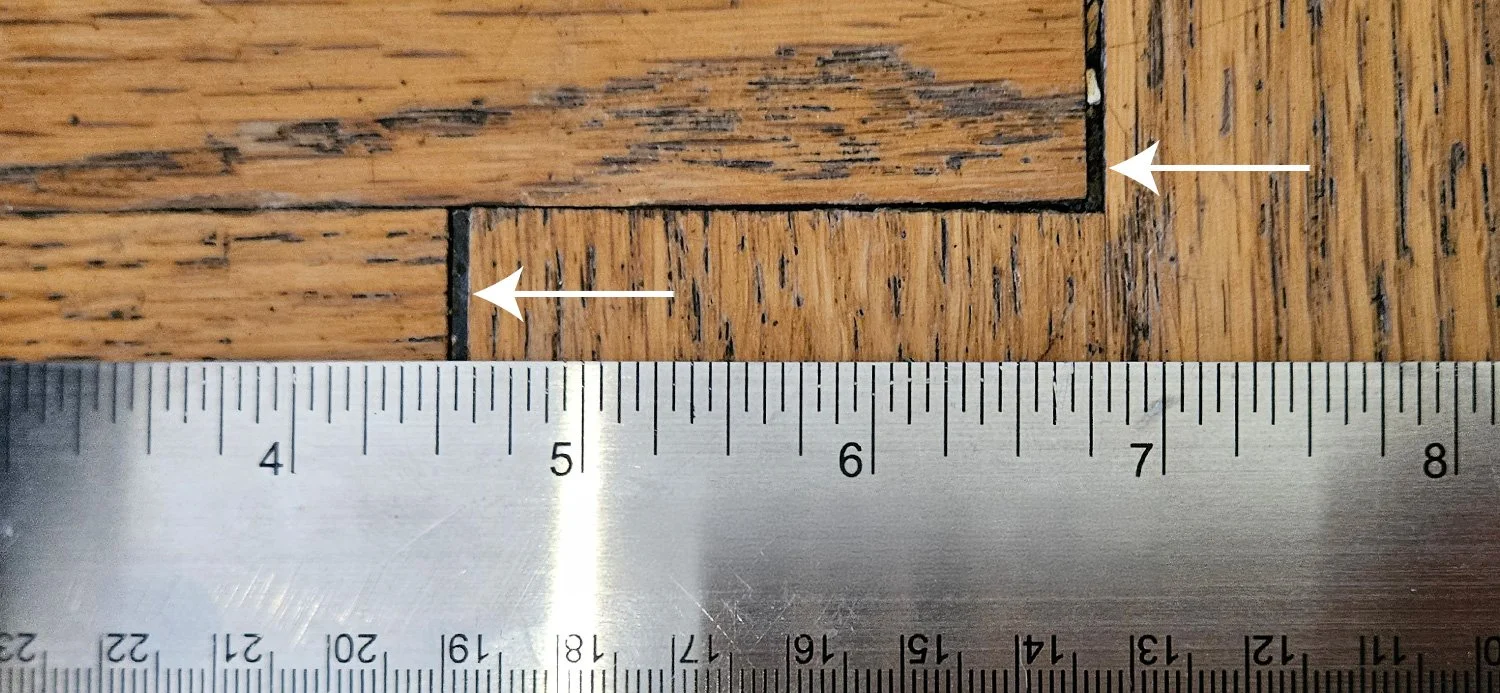
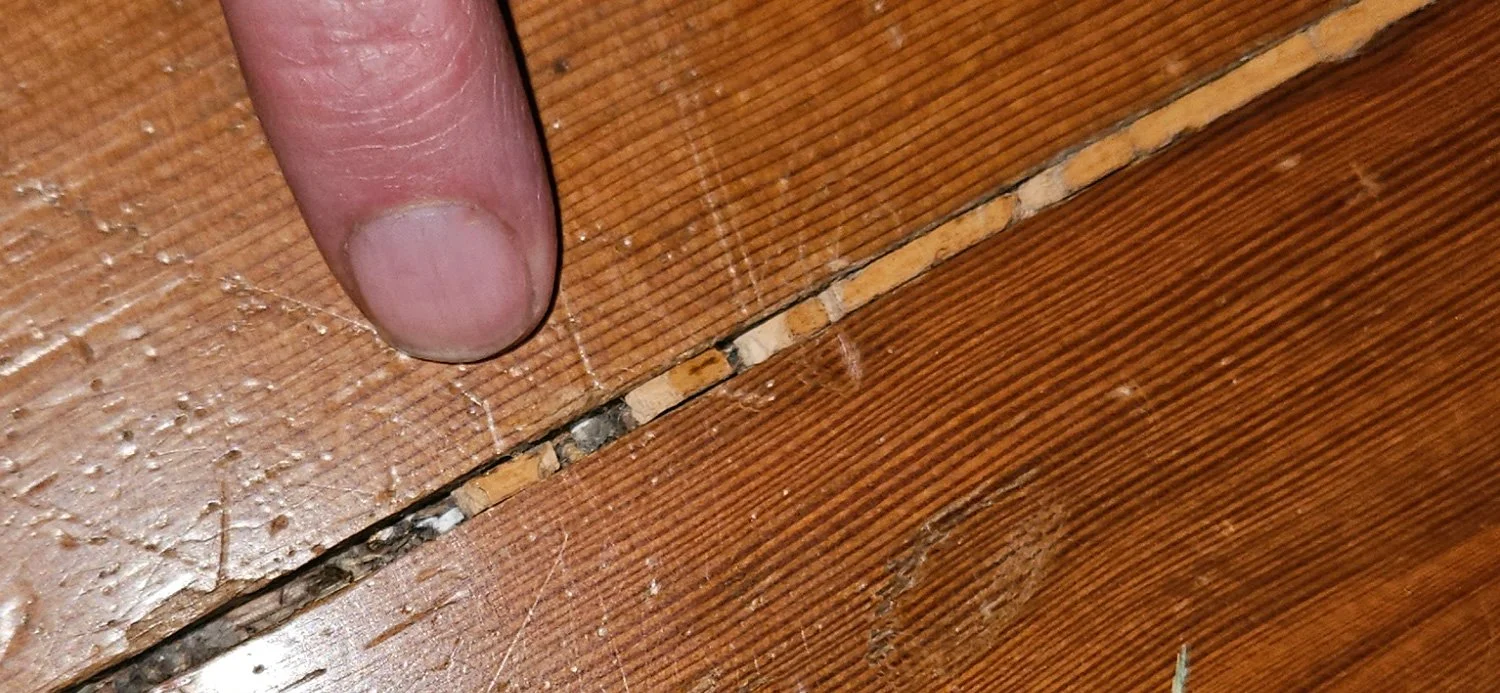
Over time and continuing expansion and contraction, the filler that was used for the gaps between these Douglas-fir floor planks has deteriorated.
