
Results Are In: An Acoustic Test of EdgeGrain
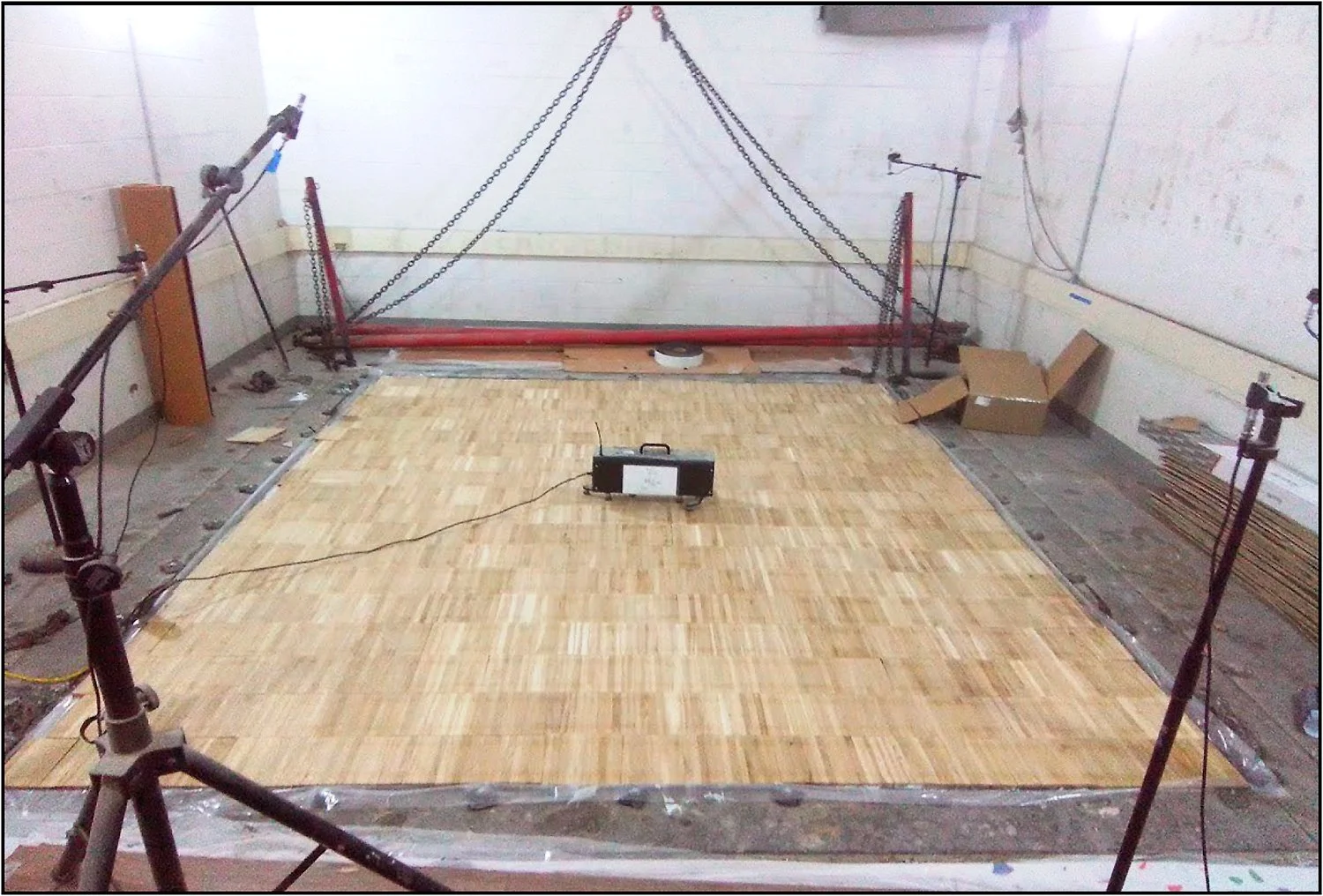
Oregon White Oak Zena EdgeGrain™ installed at the acoustic testing lab at Intertek. Photo courtesy of Intertek.
Sound’s effect on the human experience is profound. It is an important element to consider when designing a building because it can make or break how we experience a space, and can leave a lasting impression. Think of restaurants where you couldn’t hear the people at your own table.
When we think about most airports we think of them as being noisy places. Yet, at the newly redesigned Portland Airport terminal you can travel through the space and you don’t have to raise your voice to be heard. This is a built environment where many design elements are intentionally working together to dampen the sound. We began to wonder how EdgeGrain might be acting as one of those contributing elements.
So we decided to dive deeper and contacted Intertek about their acoustic testing at their facility in York, Pennsylvania. Sound is tricky to measure. It is not like light. It can travel through walls and floors, and it can bounce and reflect in ways you would never suspect. Adding to that complexity, there are endless construction possibilities and each one changes how sound travels through the combined layers. With that in mind, Intertek tested our Oregon White Oak EdgeGrain with a particular floor assembly that is commonly used in apartment complexes to see how sound transmitted from one floor to another.
The Test Results
We are pleased to share the results below, and learned that EdgeGrain can play an important role in contributing to the acoustic health of built spaces.
Sound Transmission Class= STC 60
This STC indicates an excellent level of sound reduction, indicating that loud speech and typical household noise from neighboring apartments will not be audible and ensure privacy. This level exceeds standard construction requirements.
Impact Insulation Class= IIC 54
IIC measures a floor and ceiling assembly’s ability to block impact noises (footsteps, or dropped objects) from being heard in the room below. An IIC of 54 indicates a fairly good level and is generally considered acceptable for most residential and commercial uses and meets or exceeds typical building code requirements.
High-Frequency Impact Insulation Class= HIIC 55
HIIC measures for sound generated by things like footsteps from heels and hard soled shoes, furniture movement and more. The number 55 indicates a high level of sound insulation against these types of noise.
The Report
The full EdgeGrain Intertek report is available upon request.
Explore More
The Science of sound is fascinating to explore. In this short video Thomas Heatherwick, founder of Heatherwick Studio in the United Kingdom, provides a brief exploration of acoustics in architectural spaces.